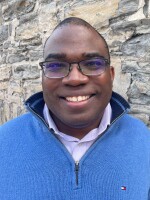
Four years ago, Lt. Gov. Antonio Delgado was heralded as New York’s first lieutenant governor with Latino roots.
But Delgado, who identifies as Afro-Latino, is not seeking re-election. And when he leaves office at year’s end, it could leave the Empire State’s Hispanic community back in a familiar place. No Latino or Latina has otherwise held statewide office, nor been elected mayor of New York City.
“And that's not to say that we don't have great representation,” said Assemblymember Karines Reyes, a Bronx Democrat who leads the Legislature’s Puerto Rican and Hispanic Task Force. “But oftentimes the nuances and the needs of our communities are lost because we're not at the table.”
During this Hispanic Heritage Month, leaders are marking the strides Latinos have made politically in New York – holding dozens of elected positions at the local level -- while noting there have been few elected to higher office. New York is home to the fourth-largest Latino population in the nation. Yet, in sheer number, it significantly trails other large states when it comes to Latino representation, particularly in the south and west, data show.
Joseph Hernandez is running as the GOP candidate for state Comptroller, the only current statewide candidate in reliably blue New York. New York has five members of Congress with Latino or Hispanic heritage, all from New York City.
Yet Latinos now represent more than one of out every eight voters in the state, according to research from the National Association of Latino Elected Officials. That helped fuel a 44% increase in Latino turnout in New York between 2004 and 2020.
“You don't elect an ethnic candidate because it's time to do that, you elect whomever it's right for the political moment we are living,” said Luis Miranda, founding president of the Hispanic Federation and the past board chairman of the Latino Victory Fund.
Jonathan Rivera, a Buffalo Democrat, became the first Latino Assemblymember from upstate and western New York when he took office in 2021. He has since been joined in that chamber by Assemblymember Gabriella Romero, an Albany Democrat.
Rivera will repeat that feat as a State Senator since he’s running unopposed in November in a district that is roughly 7% Latino.
“It's on me and other people to do as much as we can to extend ourselves to places where there are Latinos that are not represented and … feel quite voiceless,” Rivera said.
Representation has been part of a push by Rivera and others to add separate judicial districts for Erie, Monroe and Onondaga Counties, citing the low number of minority judges among other reasons. The boundaries of the Fourth Judicial Department haven’t changed since the founding of the state.
“Whether it be in the congressional redistricting or in judges or o even our own districts … we have to have hard conversations of spaces where in which people are representing communities that they no longer reflect, and I don't mean solely ethnically,” Rivera said.
And as demographics across the state change, political leaders say the time will come for more Latinos to take the stage.
“I believe that there are enough Latino elected officials out there, but it's an entire new young generation,” Miranda said. “And within that generation, some of them will surface and go to the top and go into citywide or statewide offices.”