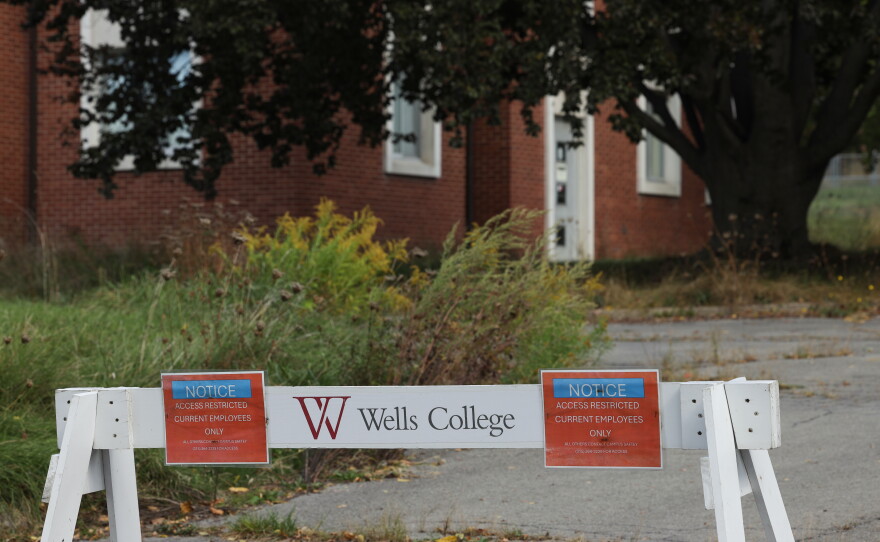
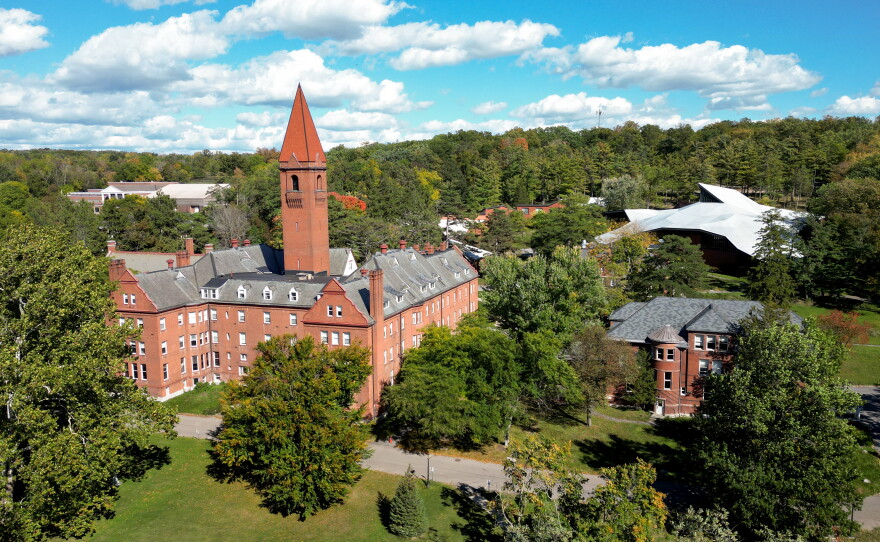
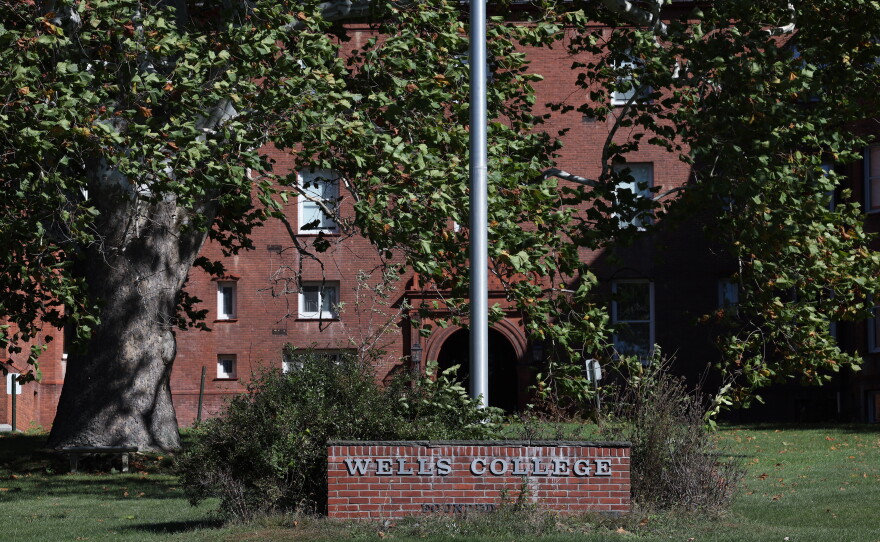
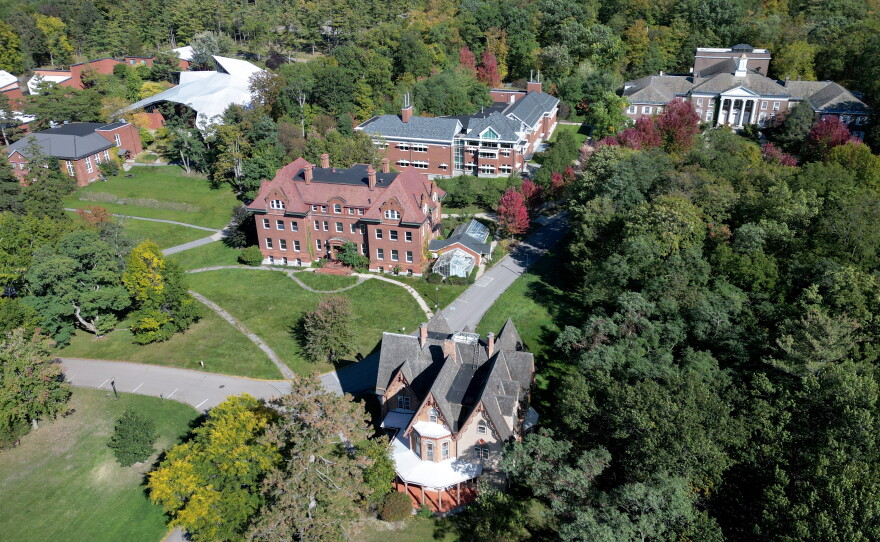
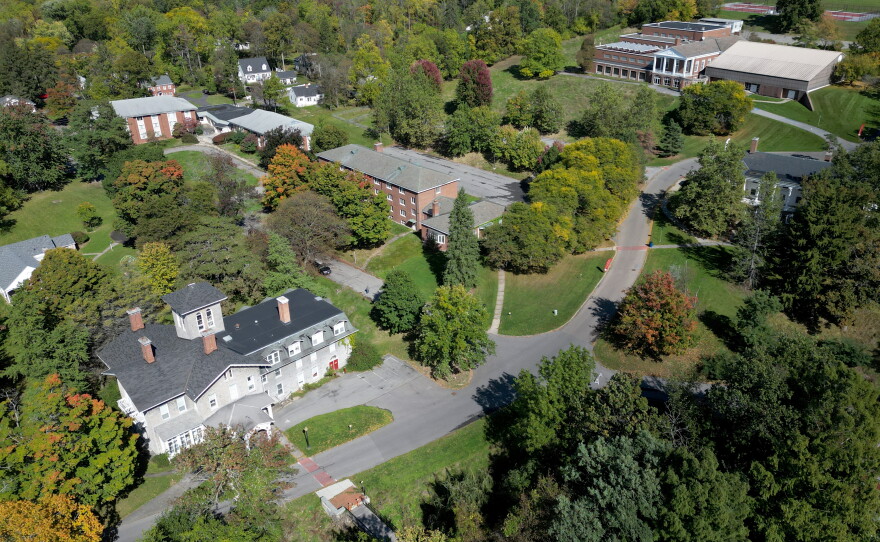
The former Wells College campus in the village of Aurora, New York. Wells College has received court approval to sell and transfer artwork, artifacts, rare books and other property as it continues to wind down operations after its June 2024 closure. The future of the campus remains unresolved after a proposed $12.5 million sale fell through earlier this year.
The former Wells College campus in the village of Aurora is back on the market and could be sold off in pieces.
Remaining artwork and antiques that once adorned the picturesque property along the shores of Cayuga Lake are headed for auction, after a judge gave the go-ahead last week.
Max Schulte
/
WXXI News
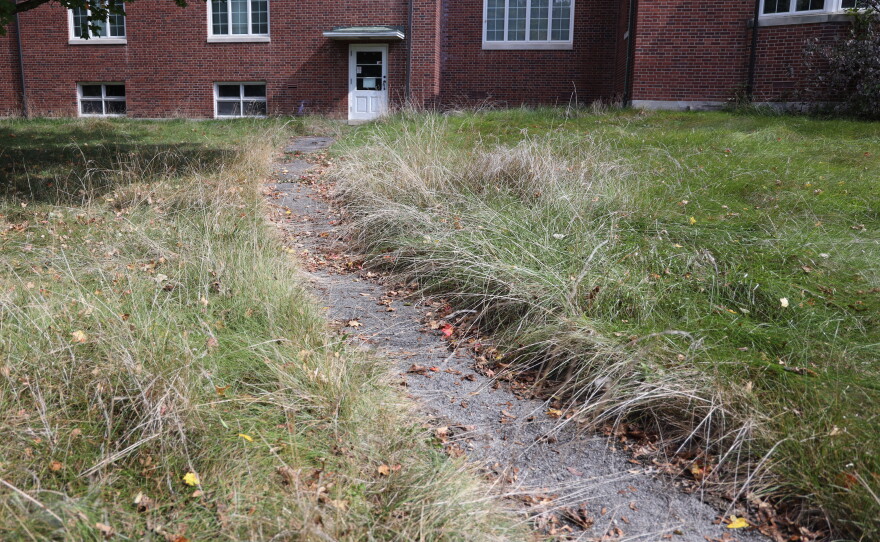
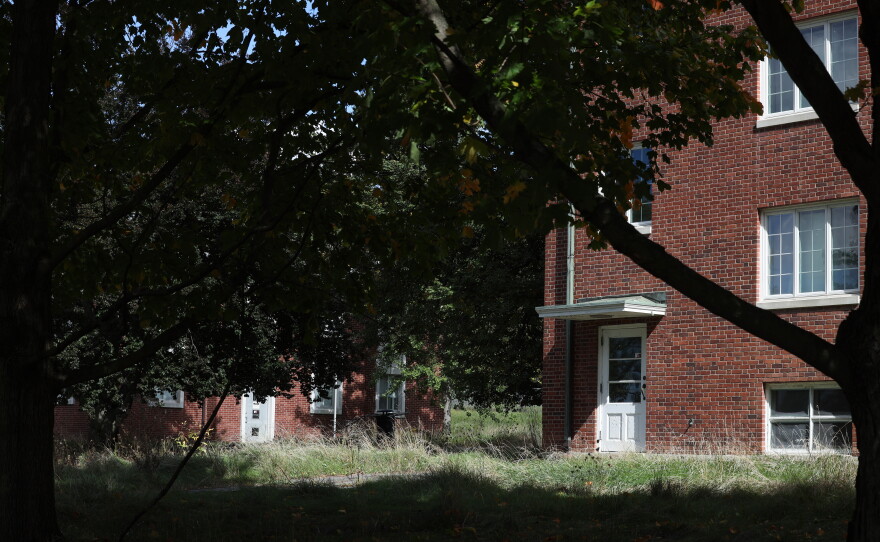
Weld Residence Hall shows signs of water damage at the former Wells College campus in the village of Aurora, New York. Wells College has received court approval to sell and transfer artwork, artifacts, rare books and other personal property as it continues to wind down operations after its June 2024 closure. The future of the campus remains unresolved after a proposed $12.5 million sale fell through earlier this year.
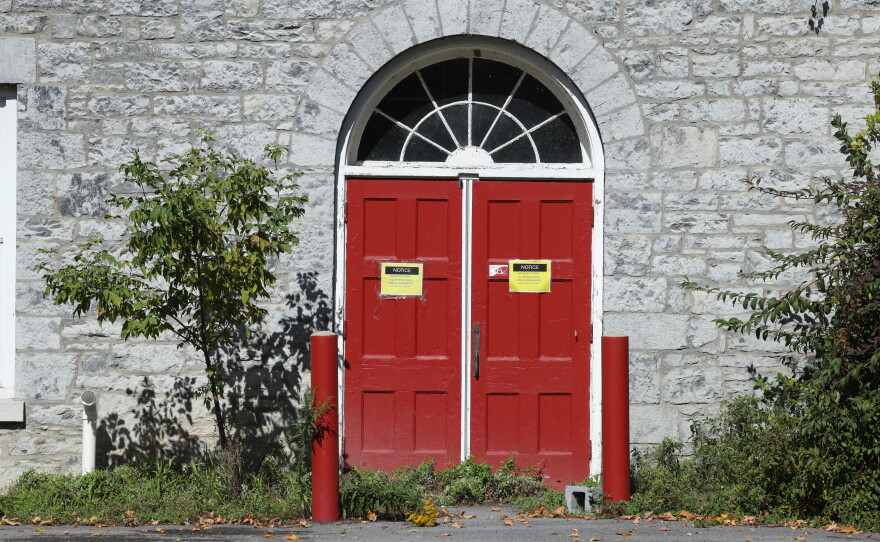
The private liberal arts college ceased operations in June 2024, beset by mounting debts and falling enrollment. Now more than two years into a protracted and litigious sales process, a snubbed bidder whose deal to buy the historic property collapsed this summer, is claiming the market value of the 113-acre campus is plummeting and its aging buildings have fallen into a state of decay.
The Hiawatha Institute for Indigenous Knowledge is suing to force the sale, though for something far less than its previously negotiated $12.5 million. In an amended complaint filed last week, the nonprofit claimed that some of the 23 campus buildings’ ceilings have collapsed, that roofs are leaking, and the president's house is moldy.
College President Susan Henking says those claims are overstated or incorrect — but the concerns are not misplaced.
“This is a crisis,” she said. “It’s been a crisis since the day the place closed.”
Wells College is not alone.
Colleges are closing or merging at a dizzying pace with an estimated 400-plus deemed at risk over the next decade. In upstate New York, the past 11 months have seen the former College of Saint Rose sold to Albany County. Medaille University in Buffalo sold to a charter school. And the former Cazenovia College campus outside Syracuse sold to multiple buyers who plan to repurpose them for government offices, as well as residential and commercial uses.
The financial strain leaves many in disrepair before, and certainly after, closure. Potential reuses vary, but can be limited by building layouts and zoning. And all of this requires navigating a heavily regulated framework that still surrounds the colleges, and the disposition of assets, after closure.
1 of 15 — wells college 16.jpg
Leach Residence Hall at the former Wells College campus in the village of Aurora, New York. Wells College has received court approval to sell and transfer artwork, artifacts, rare books and other personal property as it continues to wind down operations after its June 2024 closure. The future of the campus remains unresolved after a proposed $12.5 million sale fell through earlier this year.
Max Schulte / WXXI News
2 of 15 — Wells College 18.jpg
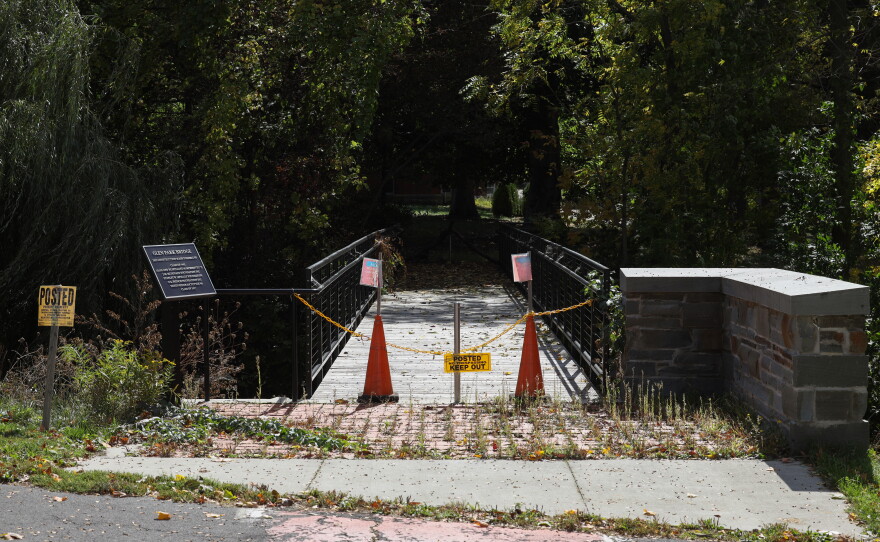
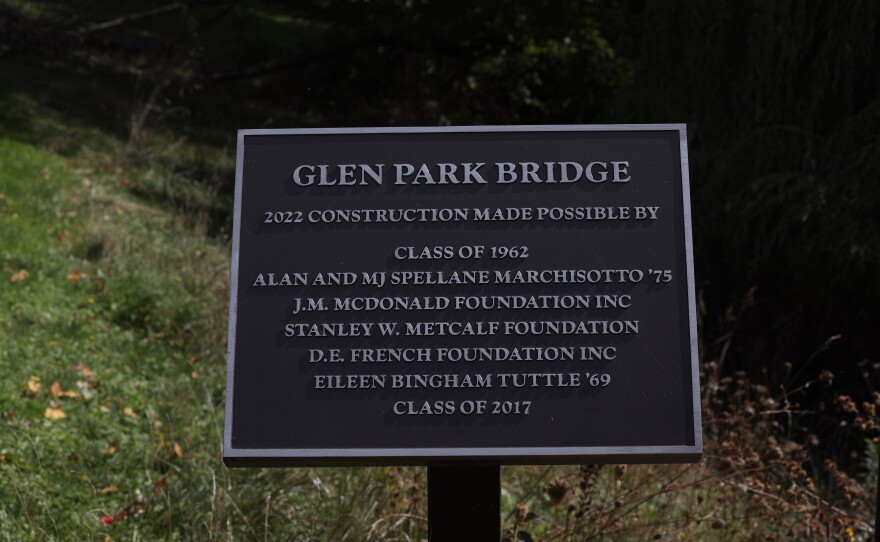
The Glen Park Bridge at Wells College in the village of Aurora, New York, is a historic pedestrian bridge that was rebuilt and reopened on May 4, 2023, after years of fundraising by the classes of 2017 and 1962. Wells College has received court approval to sell and transfer artwork, artifacts, rare books and other personal property as it continues to wind down operations after its June 2024 closure. The future of the campus remains unresolved after a proposed $12.5 million sale fell through earlier this year.
Max Schulte / WXXI News
3 of 15 — Wells College 19.jpg
The Glen Park Bridge at Wells College in the village of Aurora, New York, is a historic pedestrian bridge that was rebuilt and reopened on May 4, 2023, after years of fundraising by the classes of 2017 and 1962. Wells College has received court approval to sell and transfer artwork, artifacts, rare books and other personal property as it continues to wind down operations after its June 2024 closure. The future of the campus remains unresolved after a proposed $12.5 million sale fell through earlier this year.
Max Schulte / WXXI News
4 of 15 — Wells College 20.jpg
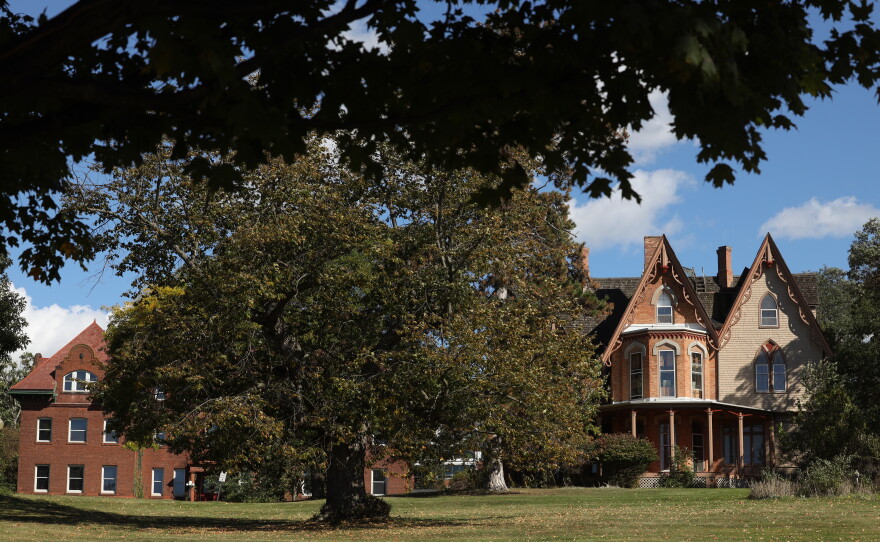
Glen Park Residence Hall at the now-closed Wells College in the village of Aurora, New York, was originally built as the private home of college founder Henry Wells. Wells College has received court approval to sell and transfer artwork, artifacts, rare books and other personal property as it continues to wind down operations after its June 2024 closure. The future of the campus remains unresolved after a proposed $12.5 million sale fell through earlier this year.
Max Schulte / WXXI News
5 of 15 — Wells College 3.jpg
The Main Building housing a chapel, string room gallery, and residence halls at the former Wells College campus in the village of Aurora, New York. Wells College has received court approval to sell and transfer artwork, artifacts, rare books and other personal property as it continues to wind down operations after its June 2024 closure. The future of the campus remains unresolved after a proposed $12.5 million sale fell through earlier this year.
Max Schulte / WXXI News
6 of 15 — Wells College 10.jpg
The former Wells College campus in the village of Aurora, New York. Wells College has received court approval to sell and transfer artwork, artifacts, rare books and other personal property as it continues to wind down operations after its June 2024 closure. The future of the campus remains unresolved after a proposed $12.5 million sale fell through earlier this year.
Max Schulte / WXXI News
7 of 15 — Wells College 13.jpg
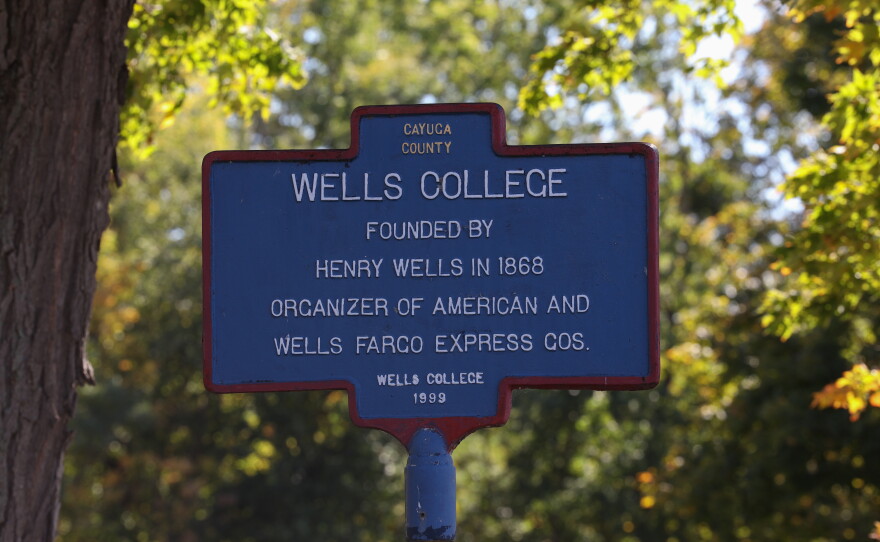
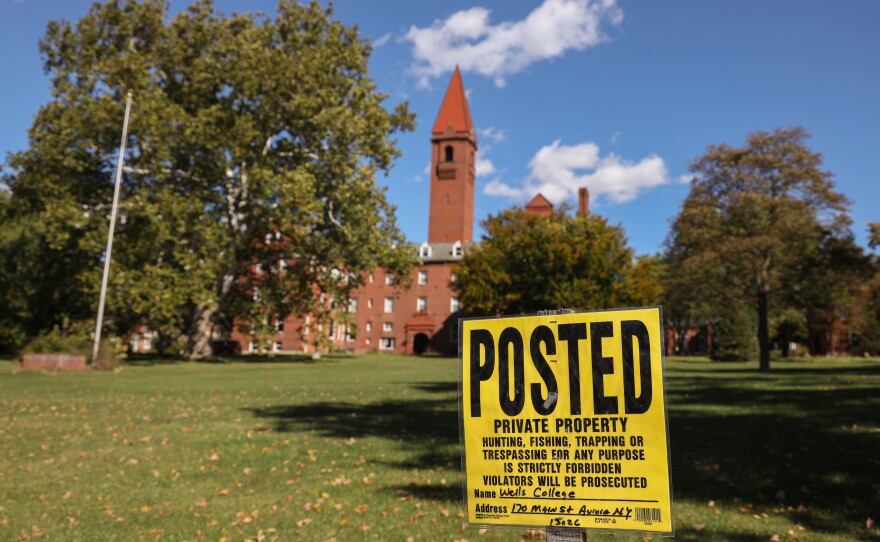
A historical marker stands outside the former Wells College campus in the village of Aurora, New York. Wells College was founded in 1868 by Henry Wells, co-founder of the American Express Co. and Wells Fargo. Established as a college for women, Wells remained a women’s college for more than 130 years before becoming coeducational in 2005. The college closed in 2024
Max Schulte / WXXI News
8 of 15 — Wells College 8.jpg
Leach Residence Hall at the former Wells College campus in the village of Aurora, New York. Wells College has received court approval to sell and transfer artwork, artifacts, rare books and other personal property as it continues to wind down operations after its June 2024 closure. The future of the campus remains unresolved after a proposed $12.5 million sale fell through earlier this year.
Max Schulte / WXXI News
9 of 15 — Wells College 1.jpg
Pettibone, Zabriskie, Stratton Science Building, and Macmillan buildings on the former Wells College campus in the village of Aurora, New York. Wells College has received court approval to sell and transfer artwork, artifacts, rare books and other personal property as it continues to wind down operations after its June 2024 closure. The future of the campus remains unresolved after a proposed $12.5 million sale fell through earlier this year.
Max Schulte / WXXI News
10 of 15 — Wells College 9.jpg
Zabriskie Hall and Pettibone house, on the former Wells College campus in the village of Aurora, New York. Wells College has received court approval to sell and transfer artwork, artifacts, rare books and other personal property as it continues to wind down operations after its June 2024 closure. The future of the campus remains unresolved after a proposed $12.5 million sale fell through earlier this year.
Max Schulte / WXXI News
11 of 15 — Wells College 7.jpg
The former Wells College campus in the village of Aurora, New York. Wells College has received court approval to sell and transfer artwork, artifacts, rare books and other personal property as it continues to wind down operations after its June 2024 closure. The future of the campus remains unresolved after a proposed $12.5 million sale fell through earlier this year.
Max Schulte / WXXI News
12 of 15 — Wells College 17.jpg
Leach Residence Hall at the former Wells College campus in the village of Aurora, New York. Wells College has received court approval to sell and transfer artwork, artifacts, rare books and other personal property as it continues to wind down operations after its June 2024 closure. The future of the campus remains unresolved after a proposed $12.5 million sale fell through earlier this year.
Max Schulte / WXXI News
13 of 15 — Wells College 4.jpg
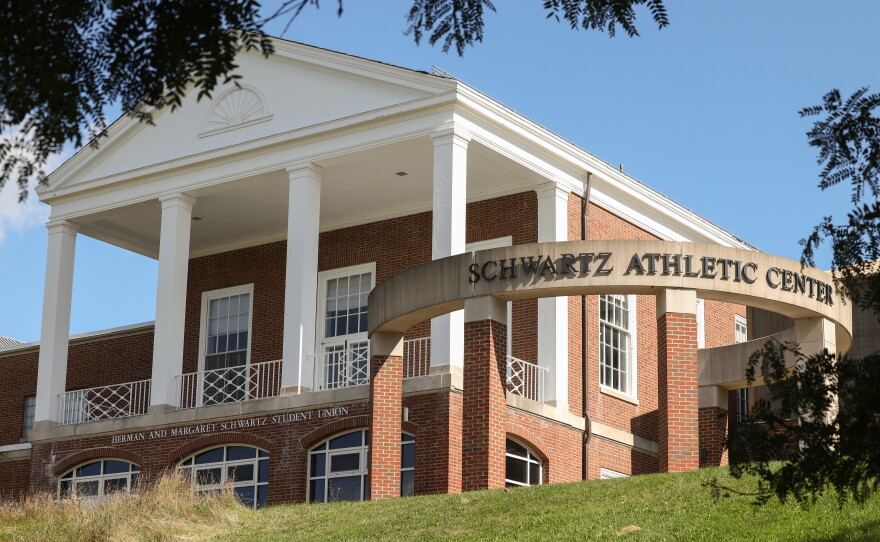
Glen Park Residence Hall, Leach Residence Hall, Schwartz Athletic Center, and Weld Residence Hall on the former Wells College campus in the village of Aurora, New York. Wells College has received court approval to sell and transfer artwork, artifacts, rare books and other personal property as it continues to wind down operations after its June 2024 closure. The future of the campus remains unresolved after a proposed $12.5 million sale fell through earlier this year.
Max Schulte / WXXI News
14 of 15 — Wells College 23.jpg
The Schwartz Athletic Center at the former Wells College campus in the village of Aurora, New York. Wells College has received court approval to sell and transfer artwork, artifacts, rare books and other personal property as it continues to wind down operations after its June 2024 closure. The future of the campus remains unresolved after a proposed $12.5 million sale fell through earlier this year.
Max Schulte / WXXI News
15 of 15 — Wells College 24.jpg
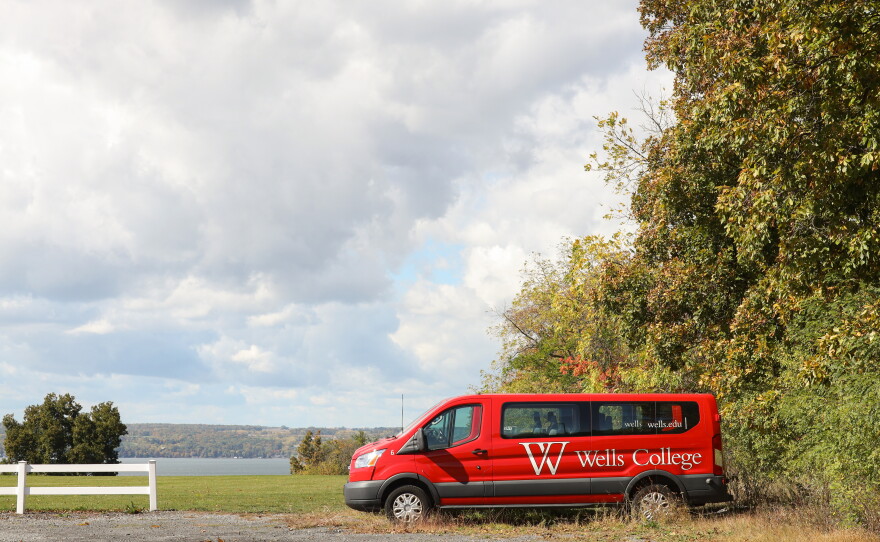
Wells College vans parked at top the field hockey field over looking Cayuga Lake at the former Wells College campus in the village of Aurora, New York. Wells College has received court approval to sell and transfer artwork, artifacts, rare books and other personal property as it continues to wind down operations after its June 2024 closure. The future of the campus remains unresolved after a proposed $12.5 million sale fell through earlier this year.
Max Schulte / WXXI News
“The crisis here,” Henking said, “is we have to make sure we dispose of this in a way that benefits — in the long run — students.”
Hiawatha Institute wanted to repurpose some or all of the buildings for an accredited university dedicated to indigenous studies. But disputes arose before the deal could close, and other buyers emerged, miring the deal in litigation.
In its amended lawsuit, the institute claims the president’s house has mold, “fungal infestation” and damaged hardwoods made worse because it was partly “used as a marijuana grow house.” Henking said the college rented out the house and later learned the tenants might have grown marijuana, but not on the scale of a commercial operation and that she never saw it.
“In the historic Glen Park building, there is now extensive water damage and falling pieces of the ceiling around the four-story spiral staircase,” the amended complaint reads, continuing later that the college removed “four interior stained-glass Tiffany windows from one building, leaving extensive damage to its classic interior woodwork.”
Max Schulte
/
WXXI News
Glen Park Residence Hall at the now-closed Wells College in the village of Aurora, New York, was originally built as the private home of college founder Henry Wells. Wells College has received court approval to sell and transfer artwork, artifacts, rare books and other personal property as it continues to wind down operations after its June 2024 closure. The future of the campus remains unresolved after a proposed $12.5 million sale fell through earlier this year.
The windows were transferred to Hobart William Smith, the college’s legacy institution that also has received or is receiving other items, including Wells’ endowment — which has to be used for educational purposes, not operational expenses.
A new property appraisal that Hiawatha Institute attached to its amended complaint asserts the market value of the campus has dropped from $10 million to $7.7 million.
“There's some consequences of being closed,” Henking said. “It's financially onerous for us. It's incredibly financially onerous for us, and we're doing what's commercially reasonable. And, in every case, we have said the campus is for sale as is.”
Henking estimated monthly operational costs at $125,000, with a skeleton administrative staff and a security contingent overseeing the property.
“We manage to mow it. We manage to keep each building dehumidified. We check where we can and mitigate — where we can — any leaks,” Henking said. “We do all of the things that we can do within the context of being a virtually fully mothballed campus.”
Max Schulte
/
WXXI News
Dodge Residence Hall on the former Wells College campus in the village of Aurora, New York. Wells College has received court approval to sell and transfer artwork, artifacts, rare books and other personal property as it continues to wind down operations after its June 2024 closure. The future of the campus remains unresolved after a proposed $12.5 million sale fell through earlier this year.
Brian Sharp is WXXI's investigations and enterprise editor. He also reports on business and development in the area. He has been covering Rochester since 2005. His journalism career spans nearly three decades.
WRVO is now well into its second year without federal funding. Through it all, our mission has stayed the same: serving central and upstate New York with trusted journalism, vital local coverage, and the diverse programming that informs and connects our communities. Listeners like you are what keep journalists on the ground, asking the hard questions that matter to our region.
Stand with public media and make your gift today. You'll be supporting more than yourself. You'll be supporting everyone who depends on WRVO as a trusted resource and civic cornerstone in central and upstate New York.